

Episode Guide
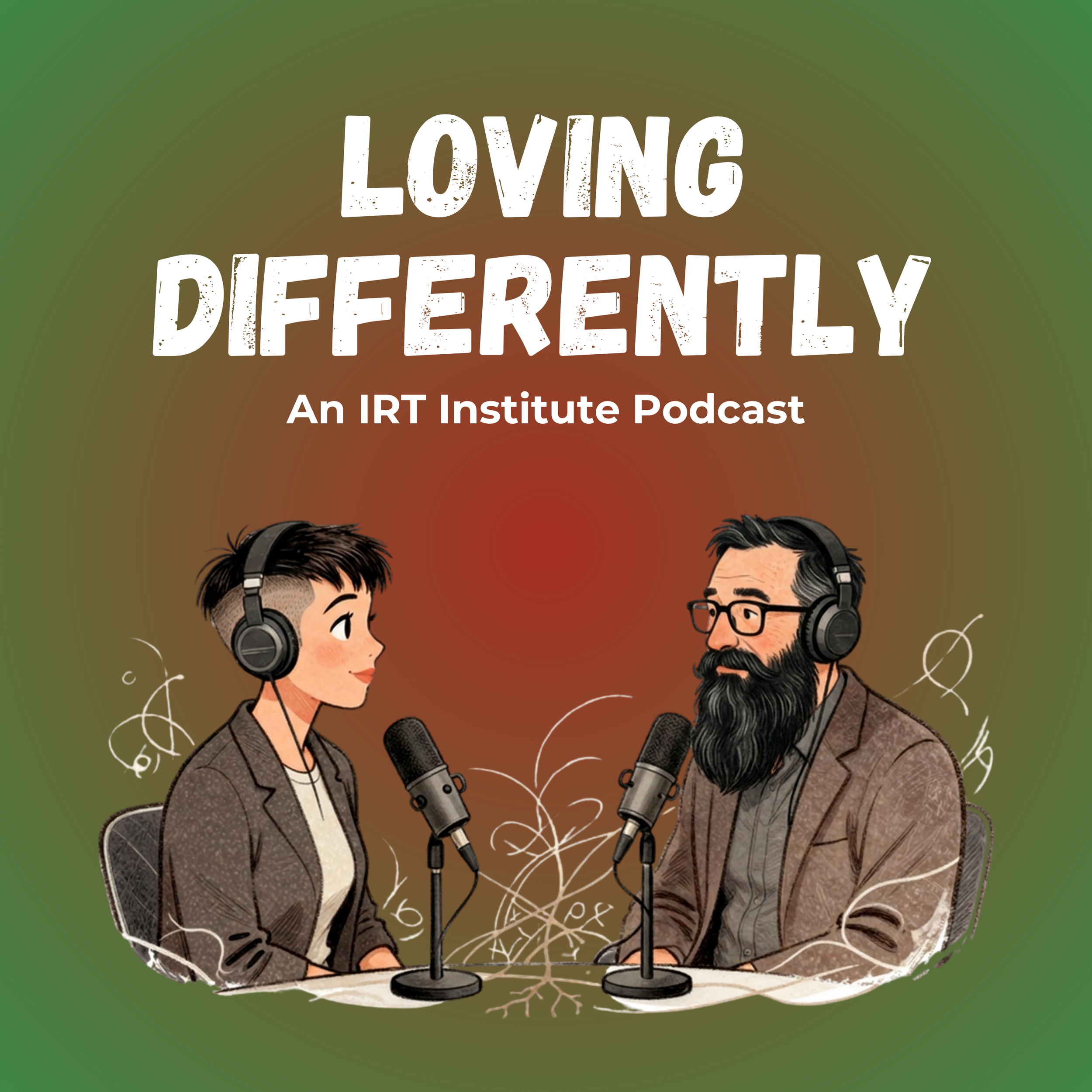
Here's an episode-by-episode guide, so you can read more about each episode in depth and search by keyword.
Please note: transcripts and summaries are AI generated.
Episode 013 - Interpersonal Harmonics Mini Series Ep 5 - Cluster A’s unpacked
Explore the interpersonal roots of paranoid, schizoid, and schizotypal personality disorders through an IRT/SASB lens — developmental histories, therapeutic challenges, and a real clinical case.
🎙️ Episode Overview:
In this episode, hosts Eliza and Ken wrap up their prototype series on the personality disorders by tackling the final and arguably most challenging cluster: paranoid, schizoid, and schizotypal personality disorders. Using Lorna Smith Benjamin's Interpersonal Reconstructive Therapy (IRT) framework and SASB (Structural Analysis of Social Behavior) coding, they trace each pattern back to its developmental origins — showing how a child's early relational world gets encoded into adult expectations, fears, and coping strategies that can look, from the outside, like simple "standoffishness" or "odd" thinking.
Along the way, the conversation raises some genuinely provocative questions: Is schizoid personality actually a disorder, or just a mismatch with social norms? Where's the line between schizotypal thinking and psychosis? And what does it mean for a therapist to be a "rhetor" — a persuader — when a client's entire belief system was shaped by people who taught them not to trust reality?
Who This Episode Is For
This episode is written primarily for clinicians, trainees, and supervisors — particularly those working in outpatient, inpatient, or crisis settings who encounter guarded, withdrawn, or eccentric presentations and want a deeper formulation-level understanding of what's driving them. It will also appeal to psychology students and general listeners with a strong interest in personality theory, attachment, and the psychology of trust and reality-testing.
🧩 Major Themes and Discussion Points:
The Paranoid Bind: Safety Through Distance and Control
Paranoid personality is rooted in a baseline expectation that others intend harm. Eliza and Ken unpack how sadistic, cold, controlling parenting — often paired with scapegoating and messages that the child was "bad" — teaches a child that safety comes only from walling off and tightly controlling the self. The episode explores why this makes the therapeutic relationship itself an uphill climb: why would someone who expects betrayal ever trust a therapist enough to begin treatment?
Is Schizoid Personality Actually a Disorder?
One of the episode's most interesting threads questions whether schizoid personality — characterized by minimal interest in relationships and a rich inner fantasy life — represents pathology at all, or simply a temperament that diverges from social norms. The hosts discuss cultural variation, the "lone cowboy" archetype, and how modern niches (remote work, solo hobbies, digital life) may fit this personality style far better than traditional social expectations do.Schizotypal Personality and the Double-Bind of Reality
The developmental history behind schizotypal personality is described as uniquely "crazy-making": a parent who is both physically distant and demanding, punishing the child for autonomy while being simultaneously dependent on them for caretaking. This contradictory messaging erodes the child's trust in their own perceptions, setting the stage for magical thinking, ideas of reference, and a belief in influence at a distance as a way of managing fear and aggression from afar.A Real Clinical Case: Fear of Harming Others With One's Mind
Ken shares a case example of a young client who feared that his thoughts and feelings could physically harm his mother — a belief traced directly back to a caregiver who described his behavior in bodily, life-or-death terms. The case illustrates how schizotypal beliefs, while clinically striking, make coherent sense once mapped onto a client's attachment history.The Therapist as "Rhetor": Persuasion, Collaboration, and Shared Reality
The hosts explore the idea of the therapist as a rhetor — a persuader — and what it means to ask a client to reconsider a belief system taught to them by the people they were most loyal to. This raises broader questions about the boundary between maladaptive belief and religion, mysticism, or culturally normative belief systems, and how clinicians can build a case formulation compelling enough to shift entrenched, reality-distorting patterns.Where Schizotypal Meets the Psychosis Spectrum
The episode closes with a discussion of where schizotypal personality sits relative to schizophrenia-spectrum conditions — and the long-standing, still-unresolved debate about how much of this presentation is biologically driven versus shaped by developmental and relational input.
📚 References Mentioned in Episode:
Benjamin, L.S. (2003). Interpersonal diagnosis and treatment of personality disorders. Guilford Press.
Critchfield, K. L., & Benjamin, L. S. (2024). Structural analysis of social behavior: A primer for clinical use. APA.
Curious how attachment history shapes even the most guarded and unusual personality presentations? Listen to the full episode of Loving Differently to hear the complete breakdown — and don't forget to subscribe and leave a review to help more clinicians find the show.
Episode 012 - Interpersonal Harmonics Mini Series Ep 4 - Narcissistic and Antisocial Personality
Explore narcissistic and antisocial personality disorders through Interpersonal Reconstructive Therapy (IRT), developmental trauma, and attachment.
🎙️ Episode Overview:
In this episode of Loving Differently, Dr. Kenneth Critchfield and Dr. Eliza Stucker-Rozovsky continue their Personality Harmonics series by exploring narcissistic and antisocial personality disorders through the lens of Interpersonal Reconstructive Therapy (IRT). Rather than asking, 'What's wrong with this person?', the conversation asks a different question: 'How did these interpersonal patterns develop?' Drawing on attachment theory, developmental trauma, and interpersonal learning, the episode examines the stories that can lie beneath some of the most misunderstood diagnoses in psychology.
Who This Episode Is For
• Clinicians working with personality disorders, trauma, and attachment injuries
• Graduate students and trainees learning case formulation
• Individuals trying to understand difficult relationship patterns
• Family members and loved ones seeking greater understanding
• Anyone interested in how developmental experiences shape personality
🧩 Major Themes and Discussion Points:
What lies beneath grandiosity?
When most people think of narcissism, they think of arrogance, entitlement, or a need for attention. But what if those behaviors are only the surface of a much deeper story? Ken and Eliza explore how vulnerability, shame, and fears of rejection can coexist with grandiosity—and why understanding those origins doesn't erase the harm narcissistic behaviors can cause.
When control becomes a survival strategy
Antisocial personality disorder is often reduced to stereotypes about manipulation or criminality, but this episode asks a different question: What does a child learn about relationships when trust is dangerous? The discussion explores how environments marked by neglect, violence, or exploitation can teach someone that vulnerability is unsafe and that control becomes a means of survival.
Can we understand behavior without excusing it?
Ken and Eliza discuss the challenge of holding two truths at once: harmful behaviors have real consequences, and those behaviors emerge from understandable developmental histories.
Why are personality disorders so difficult to treat?
The episode examines why narcissistic and antisocial patterns can create unique challenges in treatment and how therapists can inadvertently reinforce the very patterns they hope to change.
The human stories behind diagnostic labels
Throughout the conversation, the hosts return to a central idea: personality disorders are not simply diagnostic categories—they are interpersonal stories shaped by love, loss, attachment, and the human need for connection.
📚 References Mentioned in Episode:
Benjamin, L.S. (2003). Interpersonal diagnosis and treatment of personality disorders. Guilford Press.
Critchfield, K. L., & Benjamin, L. S. (2024). Structural analysis of social behavior: A primer for clinical use. APA.
The goal of this series is not simply to identify personality disorders—it is to understand the human stories beneath them. Listen to Episode 12 and consider: how does your understanding of narcissistic and antisocial patterns change when you view them through the lens of developmental history and interpersonal learning?